
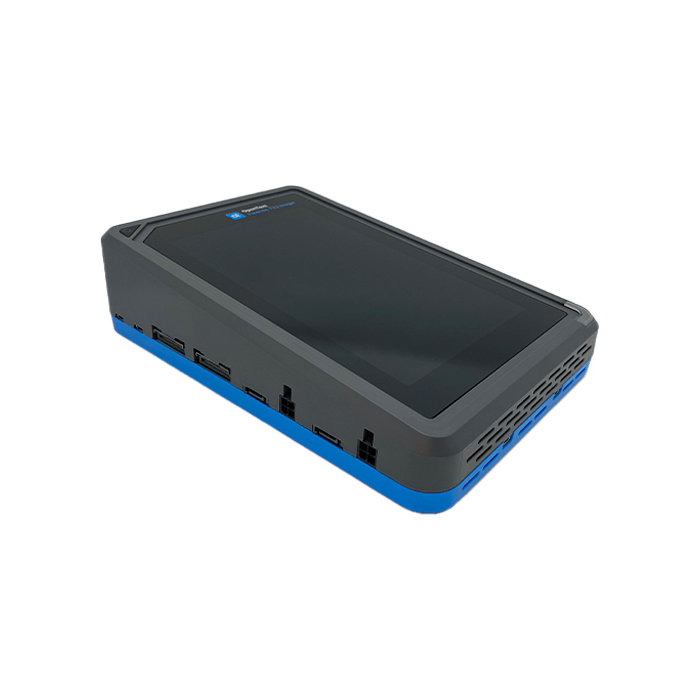
OpenText TX2 Forensic Imager
The OpenText TX2 Forensic Imager is a standalone digital evidence acquisition device designed for fast, defensible forensic imaging in lab and field environments.
- High-speed acquisition and verification
- Parallel hash verification and tree hashing
- Supports PCIe, SATA, USB, and optional legacy adapters
- Built for law enforcement, corporate DFIR, and government use
OpenText TX2 Forensic Imager for Digital Evidence Acquisition
The OpenText TX2 Forensic Imager is a high-performance standalone forensic imaging device built for digital forensics and incident response (DFIR), helping investigators acquire, verify, and preserve digital evidence with speed and confidence. Designed for law enforcement, government agencies, forensic labs, corporate security teams, and legal investigators, the TX2 supports exact bit-by-bit forensic images while helping maintain evidence integrity, completeness, and defensibility.
Built for modern investigative workflows, the TX2 combines high-speed forensic imaging, advanced readback verification, broad media compatibility, and secure evidence handling in a compact platform suitable for both field and lab environments. Whether you are handling criminal investigations, internal investigations, incident response matters, or legal evidence preservation, the TX2 is designed to help forensic teams reduce acquisition bottlenecks and improve workflow efficiency.
High-Speed Forensic Imaging and Readback Verification
The TX2 is engineered to improve forensic acquisition performance with advanced hashing and verification technologies. Parallel hash verification helps accelerate readback verification by validating data blocks independently instead of relying only on slower sequential methods. The TX2 also supports tree hashing, which breaks acquisition data into chunks for parallel processing before generating a single top-level forensic hash value representing the complete data set.
These capabilities help deliver up to 5x faster acquisition and verification performance while supporting defensible forensic imaging workflows for investigators who need both speed and confidence in the evidence they collect.
- Parallel hash verification for faster block-level readback verification
- Tree hashing to improve forensic imaging performance on large-capacity media
- Concurrent imaging and verification to reduce acquisition turnaround times
- Automatic job startup based on available system resources
- Manual override options for experienced forensic examiners
Broad Device and Media Support
The OpenText TX2 Forensic Imager is built to support a wide range of evidence sources commonly encountered in digital investigations. With PCIe, SATA, and USB source and destination support, plus optional adapters for legacy media, the TX2 gives investigators flexibility across current and older device types. Support for detached NVMe namespaces also helps improve evidence accuracy in compatible environments.
In addition to traditional storage media, the TX2 supports Apple and Android mobile device backup file acquisition, helping investigators collect and preserve mobile-related evidence as part of a larger forensic workflow.
- Supports PCIe, SATA, and USB source and destination media
- Optional adapter support for SAS, IDE, and FireWire devices
- Support for detached NVMe namespaces
- Apple mobile device backup file acquisition support
- Android mobile device backup file acquisition support
- Well suited for desktops, laptops, SSDs, HDDs, removable media, and mobile evidence sources
Built for Efficient Forensic Workflows
The TX2 is designed to help investigators work efficiently in both field and lab settings. A high-resolution color LCD and intuitive interface help simplify forensic imaging workflows, while simultaneous job handling improves productivity for busy investigative teams. Gallery view for known multimedia file types can also support faster triage when investigators need to quickly assess evidence during active cases.
Destination drive reconfiguration features further improve efficiency by allowing multiple destination media actions within a single job. This can help reduce manual preparation steps and improve consistency across forensic acquisition workflows.
- High-resolution color LCD with intuitive workflow guidance
- Gallery view support for known multimedia file types
- Simultaneous job handling for improved investigative efficiency
- Supports HPA, DCO, and AMA management
- Wipe, format, and encrypt options for destination media
- Compact standalone design for field deployment and forensic lab use
Secure Evidence Handling
For organizations that require stronger access control, the TX2 supports PIV Smart Card multi-factor authentication with YubiKey devices. These features help restrict access to authorized personnel and support secure handling of forensic images in shared or networked investigative environments.
- PIV Smart Card multi-factor authentication support
- YubiKey support for enhanced examiner access control
- Helps protect evidentiary integrity in networked environments
- Supports secure forensic workflows for enterprise and government use
Common Use Cases
- Law Enforcement Investigations: Acquire exact forensic images from suspect drives and removable media while preserving evidence integrity for criminal cases.
- Incident Response: Support rapid evidence triage and acquisition when speed, verification, and defensible handling are critical.
- Forensic Lab Workflows: Improve throughput for labs managing multiple cases with concurrent imaging and verification.
- Mobile Device Evidence: Collect Apple and Android mobile device backup files as part of a broader digital evidence acquisition workflow.
- Corporate Investigations: Preserve digital evidence for insider threat, compliance, legal hold, HR, and internal investigation matters.
- Field Triage: Use a compact forensic imager when investigators need portable acquisition without moving a full workstation on site.
Frequently Asked Questions
What is the OpenText TX2 Forensic Imager used for?
The OpenText TX2 Forensic Imager is used for digital evidence acquisition, forensic imaging, readback verification, and evidence triage in law enforcement, government, enterprise, and forensic lab environments.
How does the TX2 improve forensic imaging speed?
The TX2 uses parallel hash verification, tree hashing, and concurrent imaging and verification to reduce bottlenecks and improve forensic acquisition performance compared to traditional sequential workflows.
What types of media does the TX2 support?
The TX2 supports PCIe, SATA, and USB source and destination media, with optional adapter support for SAS, IDE, and FireWire devices. It also supports detached NVMe namespaces and Apple and Android mobile device backup file acquisition.
Why is readback verification important in digital evidence acquisition?
Readback verification helps confirm that the acquired forensic image matches the source evidence, supporting forensic integrity, defensibility, and confidence in the evidence preservation process.
Is the TX2 a good fit for forensic labs and incident response teams?
Yes. The TX2 is designed for organizations that need a dedicated forensic imager for incident response, forensic lab imaging, field triage, and high-volume evidence acquisition workflows.
Explore Related Forensic Solutions
Explore more OpenText forensic Software, browse our full range of digital forensic hardware, or view related forensic imagers and duplicators for lab and field investigations.